
Processing for Pillz: Deconstruction of Transaction Laundering Operation for Pharmacy

In October 2024, Jimmy Fu was arrested in connection with a law enforcement investigation into two illegal online pharmacies believed to be operated out of India, which utilized illicit pill presses in the U.S. and overseas. However, Jimmy was not the one pressing or shipping the pills.
On March 19, 2026, Jimmy was sentenced to one year and one day in prison after pleading guilty to operating an unlicensed money transmitting business for these illegal pharmacies. In addition to his prison time, he was sentenced to one year of supervised release and ordered to forfeit $689,697. But how did his operation get discovered, and how exactly did it work?
How The Investigation Got Started
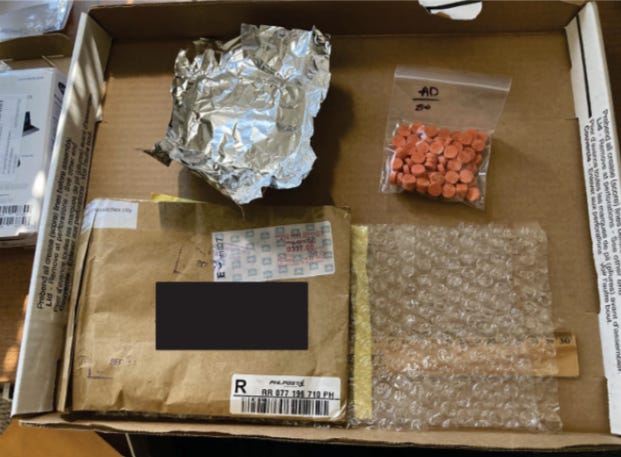
Around September 2022, law enforcement identified an individual mailing hundreds of packages of pills from various post offices and parcel delivery services. Just two months later, agents executed a federal search warrant at the pill press location where those packages originated. There, investigators discovered industrial-sized pill press machines alongside raw chemical materials.
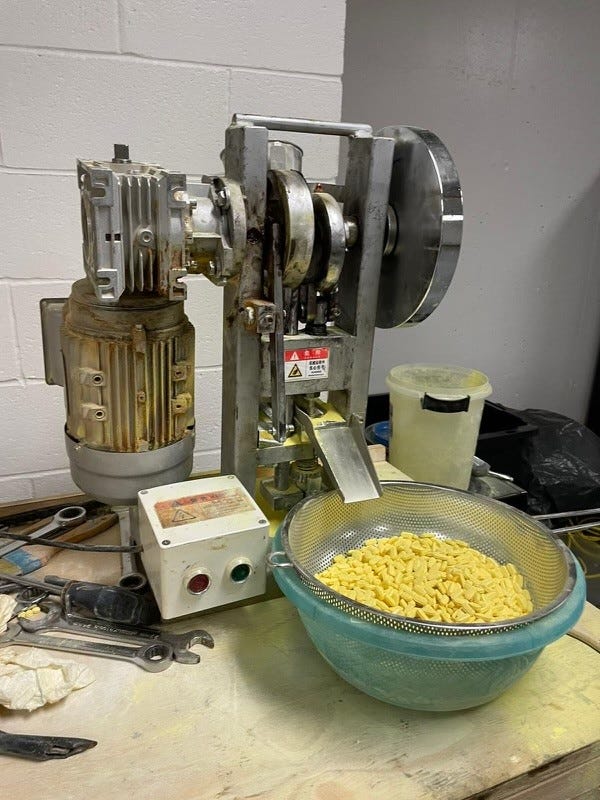
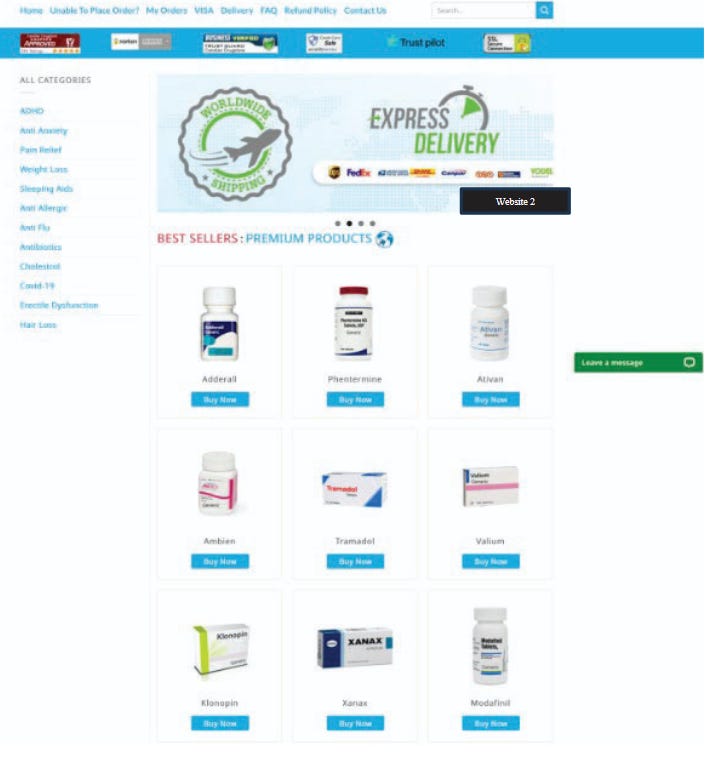
As the investigation deepened, agents tracked down and interviewed the intended recipients of the substances manufactured at the pill press location. These customers/potential buyers pointed investigators toward two websites acting as online ordering platforms for unlicensed pharmacies.
During the investigation, undercover agents visited these websites, noting a wide selection of available drugs and multiple payment options, including Venmo, Zelle, CashApp, PayPal, credit cards, and e-checks. Over the course of the investigation, agents placed multiple orders to analyze the products at the lab and map out exactly how the unlicensed pharmacies processed and received their funds.
Undercover Orders
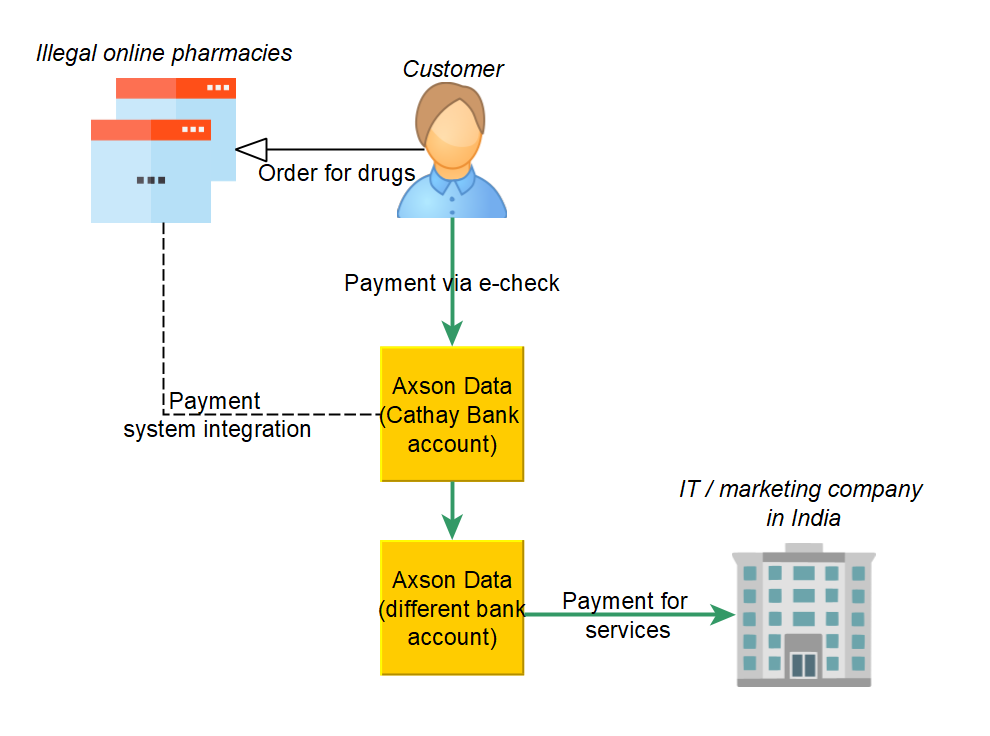
During the investigation, over 18 undercover purchases of prescription medications were made using the e-check payment option. These payments were confirmed via text messages and/or emails from “Axson Data.” The e-checks themselves were remotely generated, drawn directly from the undercover agents’ bank accounts, and ultimately deposited into accounts belonging to Jimmy Fu’s business, Axson Data.
For fellow Europeans unfamiliar with the term, an e-check (or electronic check) is simply a digital money transfer sent from one bank account to another. It functions just like a traditional paper check, but the transaction is processed entirely online. For businesses, e-checks are a standard, reliable way to receive direct deposits and handle recurring payments.
The discovery that Fu’s business was facilitating these transactions gave investigators all the ammunition they needed to dig deeper and ultimately subpoena Axson Data’s banking records.
Operations of an Unlicensed Payment Facilitator
Jimmy Fu’s Axson Data business proposition was simple: they would accept money from a merchant’s customers via e-checks and transfer it directly to the merchant’s business in exchange for a fee.

While incoming e-check payments flowed primarily into a single bank, Jimmy opened nine different accounts across various financial institutions, moving funds between them to spread the risk of detection. Banking records revealed that between January 2021 and August 2024, Axson’s accounts received approximately $11.5 million from individuals across the United States. Incoming payment memos typically designated the specific business intended to receive the funds. Shortly after deposit, the money was transferred across different Axson accounts before being routed to those final, intended recipients.
Open-source research into these end-receiver businesses indicates they were registered primarily in India for activities such as IT consulting, digital marketing, data services, and software development - rather than online pharmacies. Because Axson itself posed as an IT services provider, payments to these companies perfectly matched the stated, legitimate-looking nature of the businesses.
Interestingly enough, when agents made larger undercover purchases, website representatives directed them to split the payments so that no single transaction exceeded $1,000, a blatant tactic designed to avoid triggering automated transaction monitoring alerts.
Proving Intent
For an ironclad case, agents attempted to prove intent, showing that Jimmy, via Axson, processed payments with full knowledge of the underlying illegal pharmacy operation. To achieve this goal, investigators utilized two main methods: (1) obtaining a federal search warrant for Jimmy’s iCloud account to capture his direct communications, and (2) running an undercover operation to open illegal pharmacy accounts with Axson and track how the transactions were processed from the inside.
Jimmy was not particularly subtle about his business. Axson maintained a public website that advertised a key selling point: “We’re Creative. Our gateway make your payment process simple.” It was relatively straightforward for investigators to establish contact under the guise of opening a merchant account.
Agents received a customer questionnaire and explicitly indicated that they would be using the services to process payments for an online pharmacy. At no point were they asked to provide a license. Despite this, the account was approved, granting the undercover agents access to Axson’s online merchant platform to enter and process transaction data.
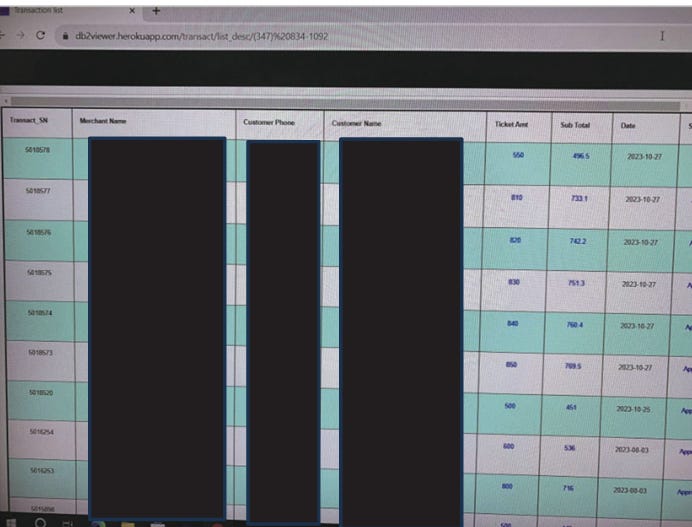
Undercover agents began entering sales data into the Axson system, explicitly including the names of controlled substances. Jimmy subsequently contacted the agents, instructing them not to enter specific names like ”’Adderall” into the sales logs. Instead, he told them to input “health products” because he did not know if they possessed a license and did not want anyone to “get in trouble”. Jimmy confirmed that he had manually changed the orders from “Adderall” to “health products” on the backend, noting that doing so kept them out of trouble in a “grey area”. This call was recorded.
After entering a few sales into their online pharmacy to see how money would be processed, Axson actively communicated about the e-checks received and in the end provided a statement of sales with the cashier’s check in the mailbox of the agents.
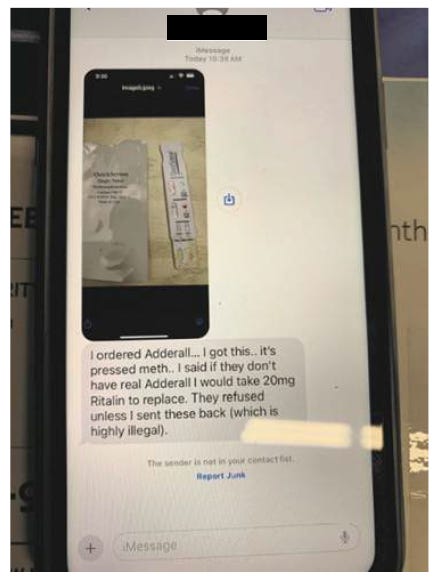
Simultaneously, agents gained access to Jimmy’s iCloud and found text messages with pharmacies customer who complained of the order being methamphetamine, not Adderall.
Ultimately, this combined evidence was sufficient to convict Jimmy Fu and secure the seizure of all of Axson’s cash assets across multiple bank accounts.
So, How Does This Better My Understanding of ML Techniques?
When crime moves online, it must rely on online methods to receive payments. While cash sufficed a few decades ago, the modern challenge of processing electronic payments has become far more complex, allowing unlicensed money transmitting businesses to step in and fill the void.
The operations of Jimmy’s business illustrate the significant challenges that unlicensed money transmitting businesses encounters:
Accounting for fund ownership. Managing whose money belongs to whom is a constant hurdle. As court documents note, payment memos typically had to include the names of the specific underlying businesses that were the intended recipients to keep the internal ledger accurate.
Evasion of transaction monitoring systems. There is a constant fear of triggering bank transaction monitoring alerts. Because of this, even relatively low-value payments (such as those around $1,000) are split and structured into even smaller amounts.
Challenges of scaling the business. Axson maintained a website that clearly showed that they were a payment gateway, which directly contradicted their officially declared business nature.
Difficulties substantiating the nature of business. Because incoming payments originated from individual retail consumers, Axson had to claim it was providing standard consumer products. However, explaining and justifying these transaction patterns to banking partners under scrutiny would prove exceptionally difficult to sustain.
The Financial Crime Intelligence Lab is a true passion project, put together in our spare time - usually early in the morning, late at night, or over weekends when we really should be doing something else. We built this space to provide deep, rigorous analysis, mostly because we noticed much of the industry coverage rarely scratches the surface, and frankly, to satisfy our own curiosity.
We hope you found this breakdown engaging. If you have any thoughts, differing perspectives, or just want to point out exactly where we went wrong, please leave a comment below.
If you appreciate the effort that goes into this, do consider subscribing. Your support helps us reach more compliance pros, legal experts, and investigators - allowing us to grow the platform, refine our own understanding, and continue documenting the endless uphill battle of trying to make sense of the fight against financial crime.
Thank you for reading, and see you next time.
Sources
In researching cases, I always strive to go straight to the source and avoid reliance on secondhand reporting. For readers keen on examining the primary materials and resources on which this case analysis is based:
United States v. Fu. Case No. 1:25-cr-10406.
“California Man Sentenced for Operating an Unlicensed Money Transmitting Business in Connection with Online Pharmacy Websites.” Department of Justice Press Release, March 19, 2026.
“What is an eCheck?“ Paypal.
Web archive of Axson’s web page “http://www.digi2checks.com/”.